What is an electric add-on drive for wheelchair users?

Ein elektrischer Zusatzantrieb für Selbstfahrer kann an manuelle Rollstühle montiert werden, um Menschen mit eingeschränkter Mobilität zu helfen, sich leichter zu bewegen. Er reduziert körperliche Anstregung bei Steigungen sowie bei Gefällen und erhöht die Flexibilität durch selbstständiges bedienen.

What is an electric auxiliary drive for self-propelled vehicles?

Summary: how to choose the right wheelchair

The following aspects are important when purchasing a wheelchair:

  • Type of wheelchair: Based on mobility impairment and place of use.
  • Seating comfort and ergonomics: Adjustability, upholstery and positioning.
  • Size and weight: Lightweight, foldable models for easy transportation.
  • Safety features: Brakes, reflective elements and standards.
  • Service and spare parts: Advice from specialist dealers and ensuring availability.

An electric add-on drive for wheelchairs is a powerful drive that can significantly improve the mobility of wheelchair users. It is attached to the wheelchair and allows the wheelchair user to control it themselves.

An auxiliary drive makes it easier to move forward, especially on uneven or steep terrain, and also extends the wheelchair user's range of action. It can either remain permanently on the wheelchair or be removed as required, depending on the user's individual needs. The control unit is simple and intuitive to operate, making it easy to control the wheelchair drive. With an electric add-on drive for wheelchairs, you can enjoy more independence and freedom in your everyday life.

Advantages of an auxiliary drive for self-propelled vehicles

Summary: how to choose the right wheelchair

The following aspects are important when purchasing a wheelchair:

  • Type of wheelchair: Based on mobility impairment and place of use.
  • Seating comfort and ergonomics: Adjustability, upholstery and positioning.
  • Size and weight: Lightweight, foldable models for easy transportation.
  • Safety features: Brakes, reflective elements and standards.
  • Service and spare parts: Advice from specialist dealers and ensuring availability.

An electric auxiliary drive for self-propelled vehicles offers many advantages. It enables greater independence and mobility as it offers a larger range of movement. It also makes it easy to negotiate inclines and declines, which can often be difficult without an auxiliary drive. Even longer distances can be covered without effort.

A lightweight add-on drive is easier to transport than a fully-fledged power wheelchair and is also airplane-compatible. This makes traveling with a wheelchair easier and more comfortable.

Different types of electric auxiliary drives

Summary: how to choose the right wheelchair

The following aspects are important when purchasing a wheelchair:

  • Type of wheelchair: Based on mobility impairment and place of use.
  • Seating comfort and ergonomics: Adjustability, upholstery and positioning.
  • Size and weight: Lightweight, foldable models for easy transportation.
  • Safety features: Brakes, reflective elements and standards.
  • Service and spare parts: Advice from specialist dealers and ensuring availability.

There are various types of electric add-on drives that can support a wide range of applications. One example is the wheel hub drive, which is fitted directly in the hub of the wheelchair wheel and drives it directly. Wheel hub drives are particularly easy to handle as they do not have any quick-release axles and are therefore particularly easy to attach or remove.


The battery is usually located in a battery bag underneath the wheelchair or is integrated into the drive wheels. One advantage of a removable battery is that it is easier to charge and store. For example, the wheelchair with drive can remain in the hallway after a trip in the rain, while the battery can be taken into the home separately.

Another option is an electric drive that is attached to the wheelchair via a bracket underneath the backrest. This bracket holds the drive securely and ensures that it can be attached and detached quickly. The drive is connected to the wheelchair wheels via drive shafts. The wheelchair wheels are fitted with sprockets in advance, which the drive shafts use to drive the wheels. The direct power transmission between the motor and wheels is crucial for the efficiency of the drive. This makes the drive robust and low-maintenance. Another advantage of this drive concept is that the additional weight of the wheelchair wheels is virtually eliminated.

You can choose between different control unit attachments such as a regular joystick, a softball, a tetra fork or other variants. This allows you to retain control of your auxiliary drive and make optimum use of it.

How do I apply for an electric auxiliary drive?

Summary: how to choose the right wheelchair

The following aspects are important when purchasing a wheelchair:

  • Type of wheelchair: Based on mobility impairment and place of use.
  • Seating comfort and ergonomics: Adjustability, upholstery and positioning.
  • Size and weight: Lightweight, foldable models for easy transportation.
  • Safety features: Brakes, reflective elements and standards.
  • Service and spare parts: Advice from specialist dealers and ensuring availability.

The first step before applying for an aid is a personal and individual consultation. Many manufacturers also offer an on-site service and will visit you at home. You should try out the various drive models in your familiar surroundings and select the model that best meets your requirements and needs.

To apply for the selected add-on drive, you will then need to make an appointment with your doctor. Your doctor will check whether such an aid is necessary and, if necessary, issue you with a prescription. This prescription should always include the product name of the product that you have selected and already tested extensively.

You can then use this prescription to contact a medical supply store in your area. They will contact the manufacturer of the electric drive and also send a cost estimate to your health insurance company. Most electric drives have an official medical aid number. The cost of the aid is therefore usually covered by your health insurance company and once it has been approved, the desired aid will be ordered and delivered to you as quickly as possible.

You can also find more information here:

Go to Guide

Maintenance and care of an electric auxiliary drive

Summary: how to choose the right wheelchair

The following aspects are important when purchasing a wheelchair:

  • Type of wheelchair: Based on mobility impairment and place of use.
  • Seating comfort and ergonomics: Adjustability, upholstery and positioning.
  • Size and weight: Lightweight, foldable models for easy transportation.
  • Safety features: Brakes, reflective elements and standards.
  • Service and spare parts: Advice from specialist dealers and ensuring availability.

The maintenance and care of an electric auxiliary drive for self-propelled vehicles is important to ensure optimum performance and longevity. It is advisable to follow the operating instructions and manufacturer's instructions to ensure that you use and care for the drive correctly. Check the wearing parts regularly to ensure they are replaced in good time.

If you have technical problems or questions about maintenance, you should contact your medical supply store or the manufacturer. Also, do not forget to charge the battery regularly to ensure constant performance.

Frequently asked questions (FAQs)

Will my health insurance cover the costs of an add-on drive?

In most cases yes, but this depends very much on the individual situation of the applicant and the specific guidelines of the health insurance company.

Is a wheelchair drive classified as a medical device?

Yes, a wheelchair drive is indeed a medical device, as it is used to promote and maintain the health and well-being of individuals.

Is my wheelchair suitable for a power-assisted add-on drive?

Generally speaking, add-on drives can be fitted to most standard manual wheelchair models. Your medical supply retailer will check with the manufacturer whether your wheelchair model is compatible.

What happens if my needs change over time?

Most add-on drives are very flexible and adaptable. Often only a few parts need to be replaced if, for example, a wheelchair needs to be changed. Some drives can even be retrofitted as a pushing and braking aid by ordering additional handles as accessories. If necessary, contact your medical supply store or the manufacturer.

Is an add-on drive also suitable for children?

Yes, many add-on drives are also suitable for children. Some drives can be attached to the wheelchair from a seat width of 28 cm and grow with the child over the years thanks to an adjustable width adjustment.

How do I travel by air with an add-on drive?

There are a few points to bear in mind when traveling by plane. Clarify the details with your airline in good time to ensure a smooth flight. In principle, wheelchairs with an auxiliary drive can be transported without any problems, but there are restrictions depending on the type of battery.

Your medical supply store or the manufacturer will provide you with transportation certificates such as a declaration of no objection. You should provide these to your airline.

Also ensure that all components are packed appropriately to protect them from damage in the hold. Removable lithium-ion batteries must be transported in hand luggage. For this purpose, some batteries can be switched to a so-called "flight mode" to render them inoperable.

For more information, contact your airline or the manufacturer of your add-on drive.

  • MAX-E

    electric drive

  • SOLO

    wheel hub drive

  • SOLO+

    wheel hub drive (XXL-solution)

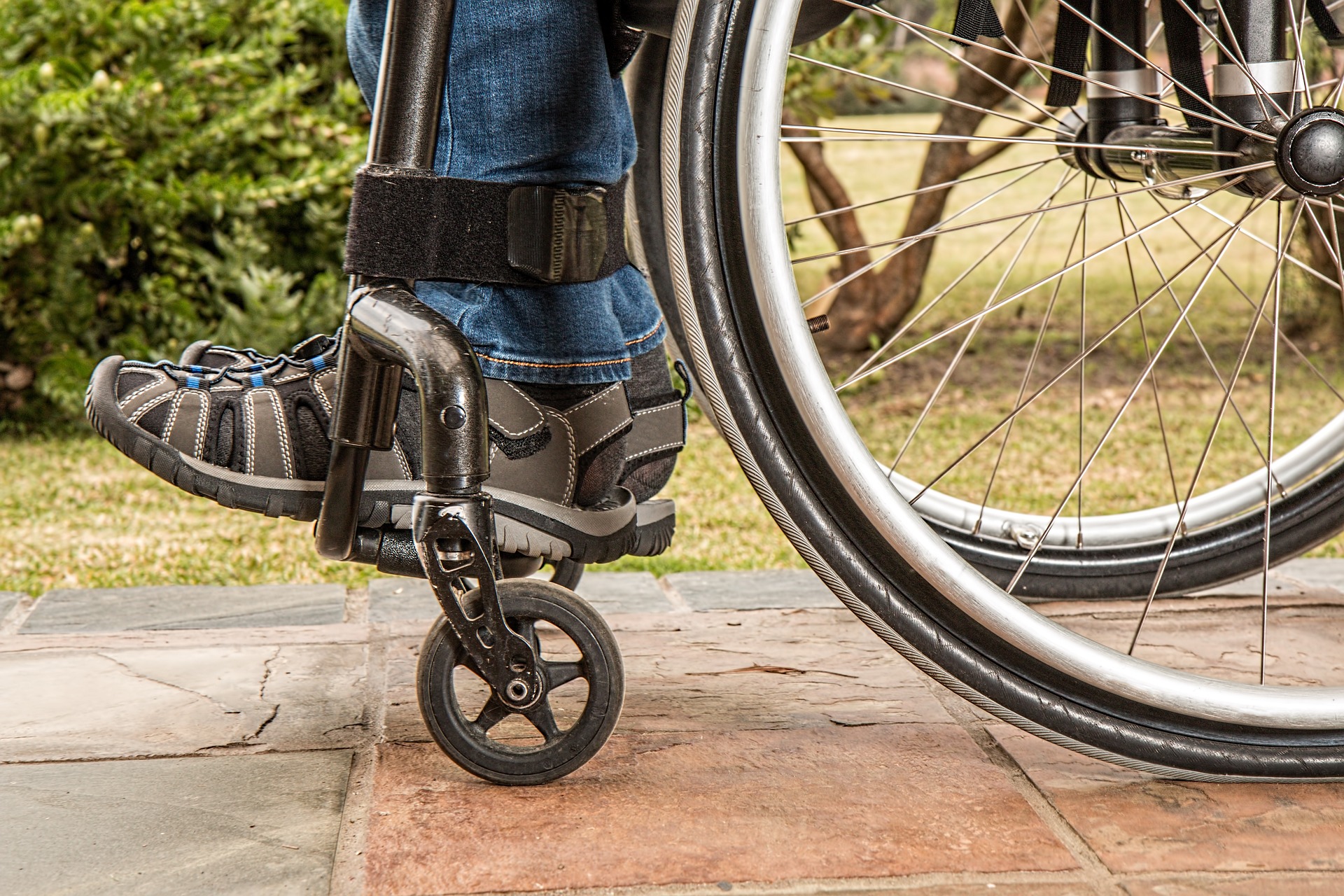
  • The picture shows clean wheelchair wheels and castors.

    Wheelchair cleaning tips

    Maintenance & cleaning

    These tips will help you to optimally clean your manual wheelchair and, if necessary, your mobility aid.

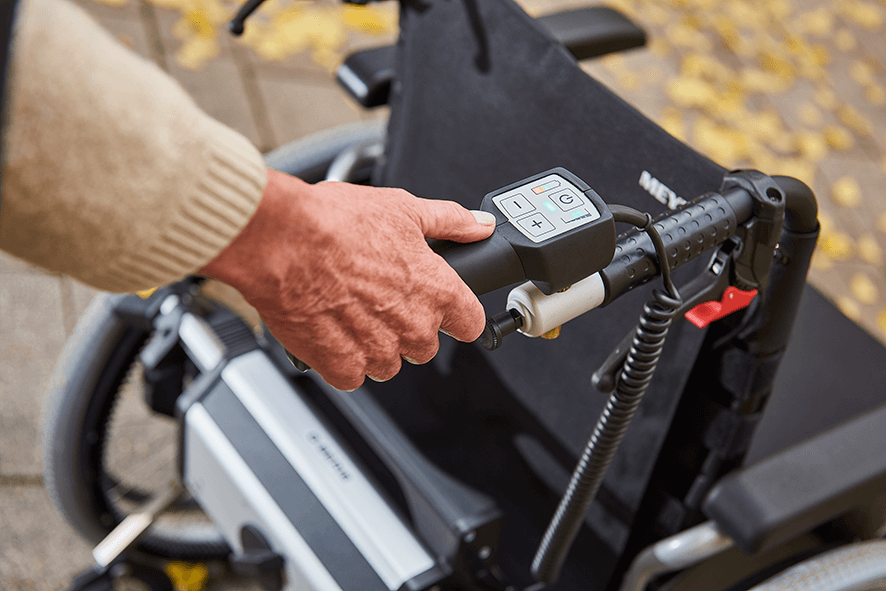
  • The picture shows a detailed section of a V-MAX² push and brake aid. You can see the operating handle of the push aid with some functions, such as the ON/OFF switch, battery indicator and speed setting.

    What is a pushing and braking aid?

    Product description

    Why is a pushing and braking aid useful? What are its areas of application and how can it be purchased? You can find all answers here.

Read more …What is an electric add-on drive for wheelchair users?

  • Hits: 2061

What is a pushing and braking aid for wheelchairs?

A pushing and braking aid for wheelchairs is a useful aid that makes it easier to use a wheelchair. It provides support when pushing the wheelchair, especially on uneven surfaces or inclines. In addition, the braking aid ensures that the wheelchair can be stopped safely, even on sloping surfaces or steeper gradients.

A pushing and braking aid is often used with special handles that enable better operation and control of the wheelchair. The wheelchair is propelled by a motor, the aim of which is to improve the mobility of the wheelchair user and their companion.

What is a push and brake aid for wheelchairs?

Summary: how to choose the right wheelchair

The following aspects are important when purchasing a wheelchair:

  • Type of wheelchair: Based on mobility impairment and place of use.
  • Seating comfort and ergonomics: Adjustability, upholstery and positioning.
  • Size and weight: Lightweight, foldable models for easy transportation.
  • Safety features: Brakes, reflective elements and standards.
  • Service and spare parts: Advice from specialist dealers and ensuring availability.

A pushing and braking aid for wheelchairs is a useful aid that makes it easier to use a wheelchair. It provides support when pushing the wheelchair, especially on uneven surfaces or inclines. In addition, the braking aid ensures that the wheelchair can be stopped safely, even on sloping surfaces or steeper gradients.

A pushing and braking aid is often used with special handles that enable better operation and control of the wheelchair. The wheelchair is propelled by a motor, the aim of which is to improve the mobility of the wheelchair user and their companion.

Why is a pushing and braking aid useful?

Summary: how to choose the right wheelchair

The following aspects are important when purchasing a wheelchair:

  • Type of wheelchair: Based on mobility impairment and place of use.
  • Seating comfort and ergonomics: Adjustability, upholstery and positioning.
  • Size and weight: Lightweight, foldable models for easy transportation.
  • Safety features: Brakes, reflective elements and standards.
  • Service and spare parts: Advice from specialist dealers and ensuring availability.

A pushing and braking aid is particularly useful for relieving the burden on the accompanying person. The range of movement is increased as longer distances can be covered without burdening the accompanying person. The risk of shoulder and back injuries, which can be caused by repeatedly pushing a wheelchair, is minimized. This makes longer trips with family or friends possible again.

Whether inclines, declines or uneven surfaces, these obstacles are no problem with a pushing and braking aid. Ramps and ramps can also be negotiated more easily, which contributes to increased driving safety.

After all, a push and brake aid also offers greater flexibility than a large power wheelchair, as it can be added or removed as required.

Areas of application for pushing and braking aids

Summary: how to choose the right wheelchair

The following aspects are important when purchasing a wheelchair:

  • Type of wheelchair: Based on mobility impairment and place of use.
  • Seating comfort and ergonomics: Adjustability, upholstery and positioning.
  • Size and weight: Lightweight, foldable models for easy transportation.
  • Safety features: Brakes, reflective elements and standards.
  • Service and spare parts: Advice from specialist dealers and ensuring availability.

The electric pushing and braking aid for wheelchairs is used in various areas. It is particularly useful in health and care facilities, where it assists care staff with patient mobility. It can also be useful in rehabilitation after injury or surgery by facilitating the transition to regaining independence.

In addition, it is used in public facilities such as schools, universities and shopping centers to ensure accessibility. Finally, the electric pushing aid can also be useful in private households to facilitate the mobility of family members with limited mobility.

Different types of pushing and braking aids

Summary: how to choose the right wheelchair

The following aspects are important when purchasing a wheelchair:

  • Type of wheelchair: Based on mobility impairment and place of use.
  • Seating comfort and ergonomics: Adjustability, upholstery and positioning.
  • Size and weight: Lightweight, foldable models for easy transportation.
  • Safety features: Brakes, reflective elements and standards.
  • Service and spare parts: Advice from specialist dealers and ensuring availability.

There are many types of pushing and braking aids for wheelchairs. An auxiliary drive, for example, can be a good option. This is fitted using a bracket that is attached to the lower part of the backrest. The drive of the pushing and braking aid can then be easily engaged or disengaged with one hand. The drive is equipped with drive shafts that drive the wheelchair wheels via sprockets. The wheelchair is controlled via control handles that are attached directly to the wheelchair handles.

Special XXL solutions are available for users with obesity. These are robust and can carry the increased weight. Particularly in the higher weight range, it is important to provide electrical support for the person pushing and braking the wheelchair.

Tips for choosing the right pushing and braking aid

Summary: how to choose the right wheelchair

The following aspects are important when purchasing a wheelchair:

  • Type of wheelchair: Based on mobility impairment and place of use.
  • Seating comfort and ergonomics: Adjustability, upholstery and positioning.
  • Size and weight: Lightweight, foldable models for easy transportation.
  • Safety features: Brakes, reflective elements and standards.
  • Service and spare parts: Advice from specialist dealers and ensuring availability.

Choosing the right push and braking aid requires careful advice. A test ride is important first to ensure that you are comfortable with the chosen model. Pay attention to the performance and battery type to ensure a longer service life. The design should not only be aesthetically pleasing, but also functional.
The weight of the pushing aid is crucial for transportation in the car. Flexibility and adjustability are other aspects that should be considered to allow for customization. Rely not only on the manufacturer's service, but also on the safety of the product. Remember that the right pushing and braking aid can significantly improve your quality of life.

Recommendations for the use of a push and brake aid

Summary: how to choose the right wheelchair

The following aspects are important when purchasing a wheelchair:

  • Type of wheelchair: Based on mobility impairment and place of use.
  • Seating comfort and ergonomics: Adjustability, upholstery and positioning.
  • Size and weight: Lightweight, foldable models for easy transportation.
  • Safety features: Brakes, reflective elements and standards.
  • Service and spare parts: Advice from specialist dealers and ensuring availability.

When using a pushing and braking aid, it is important to read the operating instructions thoroughly and to follow the manufacturer's instructions carefully. To avoid overloading the device, you should observe the technical data. The battery should also be charged regularly. It is advisable to allow only trained persons to operate the appliance.

The appliance should be cleaned carefully and with mild detergents to ensure its longevity. Remember that correct handling and care contribute significantly to the safety and efficiency of your pushing and braking aid.

If you have any questions regarding use or possible problems, you can contact your medical supply store or ask the manufacturer directly.

Where can a pushing and braking aid be purchased?

Summary: how to choose the right wheelchair

The following aspects are important when purchasing a wheelchair:

  • Type of wheelchair: Based on mobility impairment and place of use.
  • Seating comfort and ergonomics: Adjustability, upholstery and positioning.
  • Size and weight: Lightweight, foldable models for easy transportation.
  • Safety features: Brakes, reflective elements and standards.
  • Service and spare parts: Advice from specialist dealers and ensuring availability.

The first step before applying for an aid is a personal and individual consultation. Many manufacturers also offer an on-site service and will visit you at home. You should try out the various drive models in a familiar environment and select the model that best meets your requirements and needs.

To apply for the selected pushing and braking aid, you will then need to make an appointment with your doctor. Your doctor will check whether such an aid is necessary and, if necessary, issue you with a prescription. This prescription should always include the product name of the product that you have selected and already tested extensively.

You can then use this prescription to contact a medical supply store in your area. They will contact the manufacturer of the pushing and braking aid and also send a cost estimate to your health insurance company. Most wheelchair drives have an official aid number. The cost of the aid is therefore usually covered by your health insurance company and once it has been approved, the desired aid will be ordered and delivered to you as quickly as possible.

Go to Guide

Frequently asked questions (FAQs)

Will my health insurance cover the costs of a pushing and braking aid?
In most cases yes, but this depends very much on the individual situation of the applicant and the specific guidelines of the health insurance company.


Is a pushing and braking aid classified as a medical device?
Yes, a pushing and braking aid is indeed a medical device, as it is used to promote and maintain the health and well-being of individuals.


Is my wheelchair suitable for a push and brake aid?
As a rule, pushing and braking aids can be attached to most common manual wheelchair models. Your medical supply retailer will check with the manufacturer of your pushing and braking aid to see whether your wheelchair model is compatible.

  • The picture shows clean wheelchair wheels and castors.

    Wheelchair cleaning tips

    Maintenance & cleaning

    These tips will help you to optimally clean your manual wheelchair and, if necessary, your mobility aid.

  • The picture shows a detailed section of a V-MAX² push and brake aid. You can see the operating handle of the push aid with some functions, such as the ON/OFF switch, battery indicator and speed setting.

    What is a pushing and braking aid?

    Product description

    Why is a pushing and braking aid useful? What are its areas of application and how can it be purchased? You can find all answers here.

Read more …What is a pushing and braking aid for wheelchairs?

  • Hits: 1857

What is a stair climber with integreated seat?

Ein Treppensteiger mit integriertem Sitz ist ein Gerät, das entwickelt wurde, um Personen mit eingeschränkter Mobilität beim Überwinden von Treppen zu unterstützen.Der Sitz ist fest in das Gerät eingebaut und bietet eine bequeme Sitzgelegenheit für die Person, die den Treppensteiger benutzt. Außerdem ist er gepolstert und ergonomisch gestaltet, um Komfort zu gewährleisten.

What is an electric stair climber with integrated seat?

Summary: how to choose the right wheelchair

The following aspects are important when purchasing a wheelchair:

  • Type of wheelchair: Based on mobility impairment and place of use.
  • Seating comfort and ergonomics: Adjustability, upholstery and positioning.
  • Size and weight: Lightweight, foldable models for easy transportation.
  • Safety features: Brakes, reflective elements and standards.
  • Service and spare parts: Advice from specialist dealers and ensuring availability.

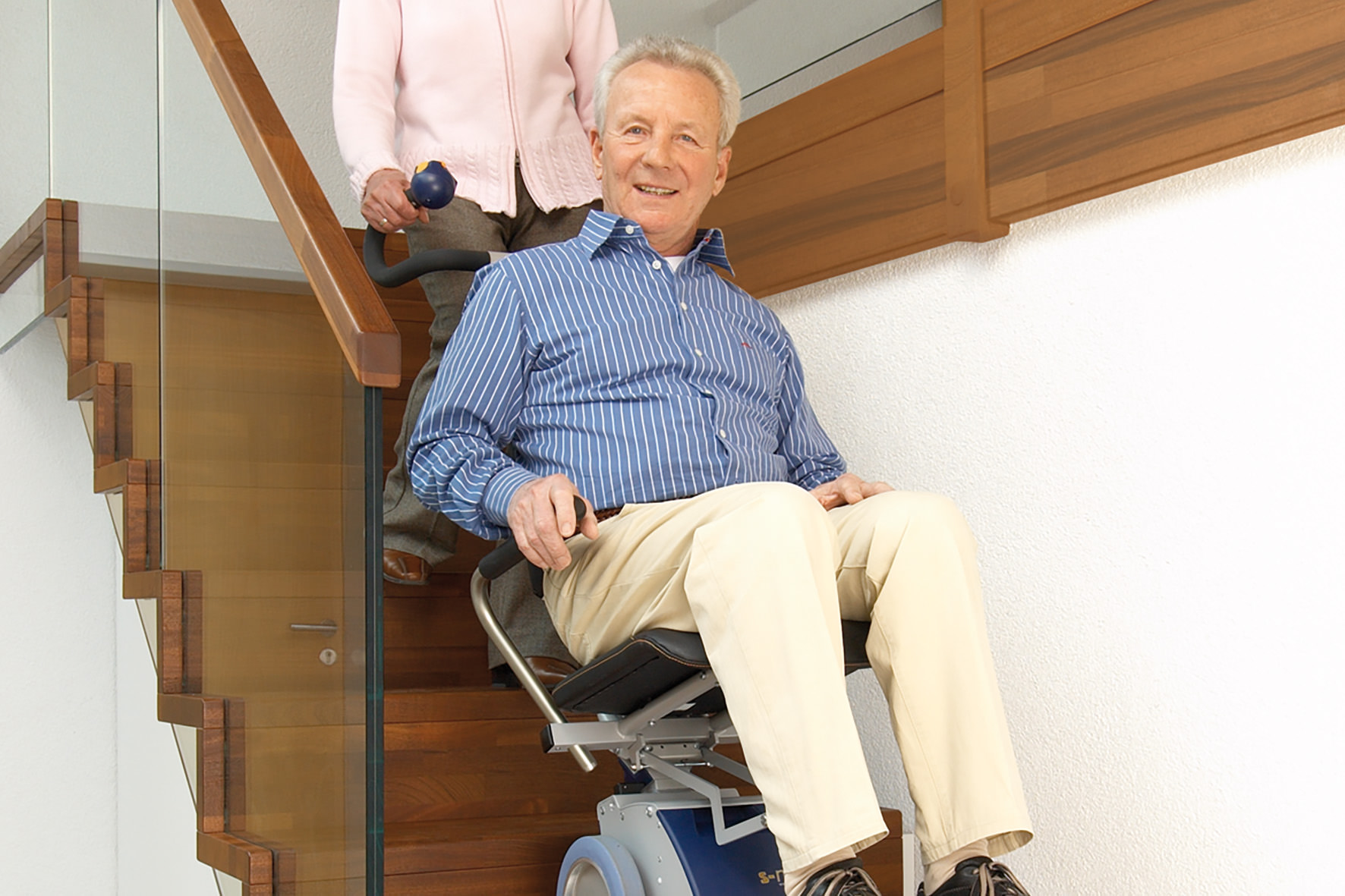
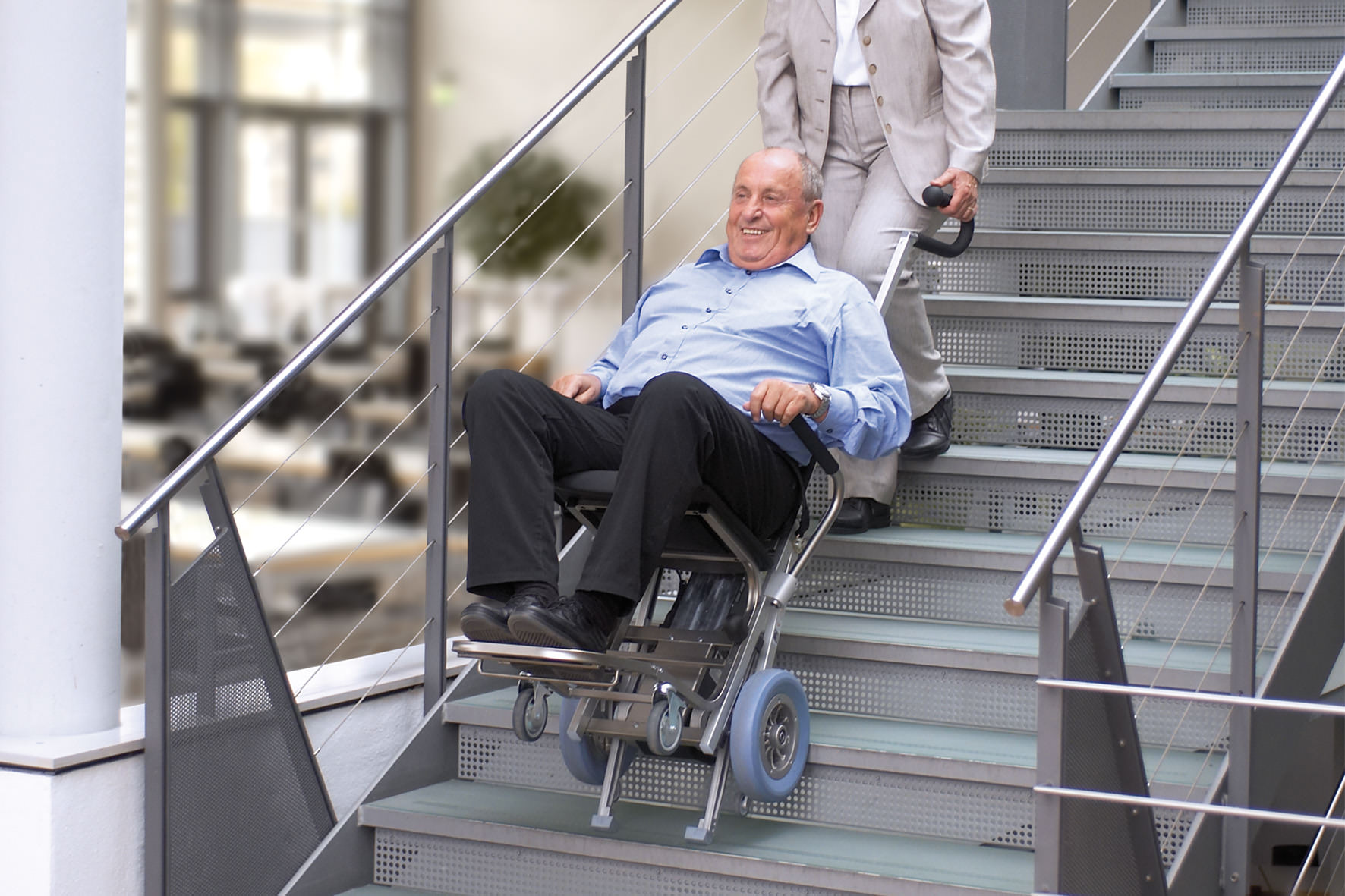
An electric stair climber with integrated seat is a specialized aid that enables safe and efficient stair climbing. It is an excellent solution for people with impaired mobility who have difficulty climbing up and down stairs. The motorized stair climber is designed to be operated by an attendant, which improves accessibility.

Its electric drive function ensures safe and controlled stair climbing. The integrated seat offers additional comfort and safety for the occupant. An electric stair climber with seat is therefore an ideal solution for improving the mobility and independence of people with walking disabilities.

Advantages and possible uses of an electric stair climber with integrated seat

Summary: how to choose the right wheelchair

The following aspects are important when purchasing a wheelchair:

  • Type of wheelchair: Based on mobility impairment and place of use.
  • Seating comfort and ergonomics: Adjustability, upholstery and positioning.
  • Size and weight: Lightweight, foldable models for easy transportation.
  • Safety features: Brakes, reflective elements and standards.
  • Service and spare parts: Advice from specialist dealers and ensuring availability.

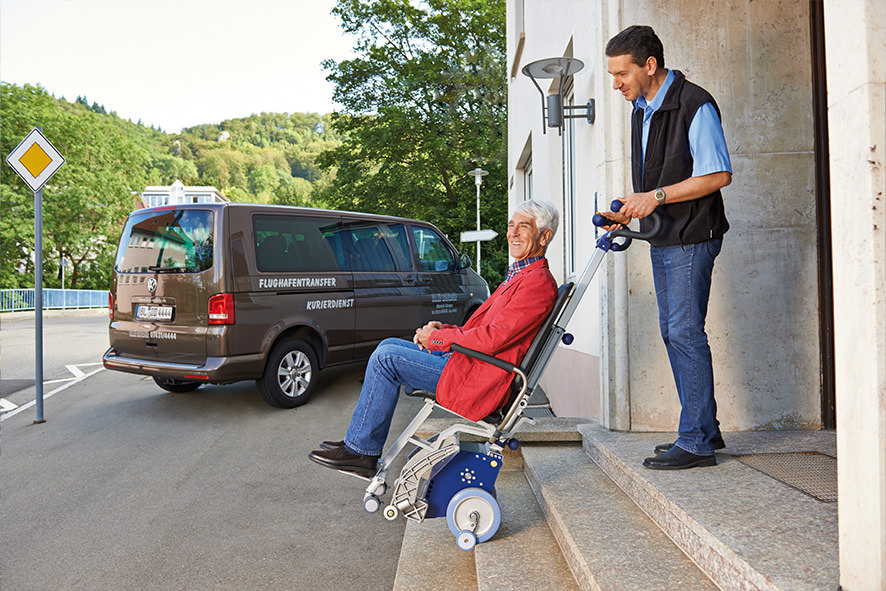
An electric stair climber with integrated seat is an excellent alternative to stair lifts and stair crawlers. It is transportable, flexible and enables you to overcome barriers without great effort. Whether at home or in public buildings, indoors or outdoors, you are mobile and can enjoy your outings, visit the family or reach the doctor's surgery - even in buildings without an elevator.

The stair climber is maneuverable and is just as suitable for straight stairs as it is for spiral staircases. Thanks to the integrated seat unit, it can also be used as a push wheelchair, offering further flexibility of use. With an electric stair climber, you gain independence and quality of life.

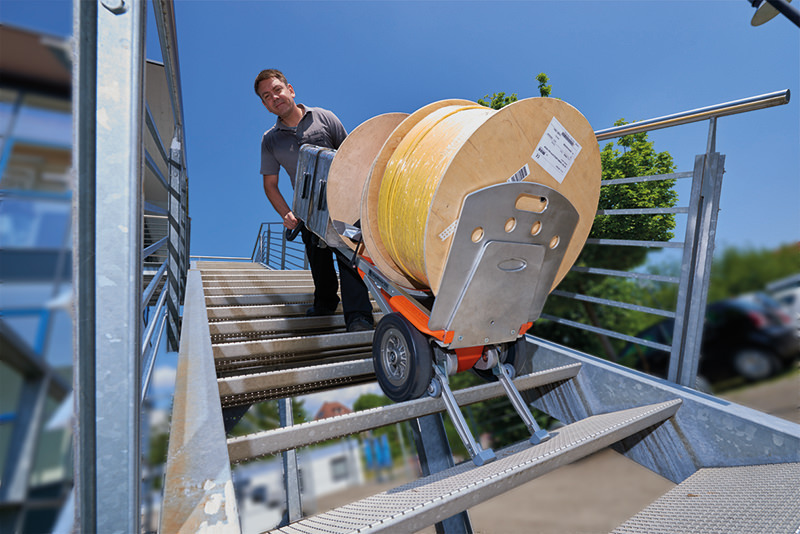
A stair climber can also be a relief for non-qualified or qualified patient transportation as well as for rescue services. Patients who are unable to walk can be comfortably transported up and down stairs without staff suffering health problems from lifting and carrying patients every day. Many stair climbers can also be carried in the ambulance during the journey.

There are also special stair climbers that are designed for heavier patient weights.

Functionality and technology of the electric stair climber with integrated seat

Summary: how to choose the right wheelchair

The following aspects are important when purchasing a wheelchair:

  • Type of wheelchair: Based on mobility impairment and place of use.
  • Seating comfort and ergonomics: Adjustability, upholstery and positioning.
  • Size and weight: Lightweight, foldable models for easy transportation.
  • Safety features: Brakes, reflective elements and standards.
  • Service and spare parts: Advice from specialist dealers and ensuring availability.

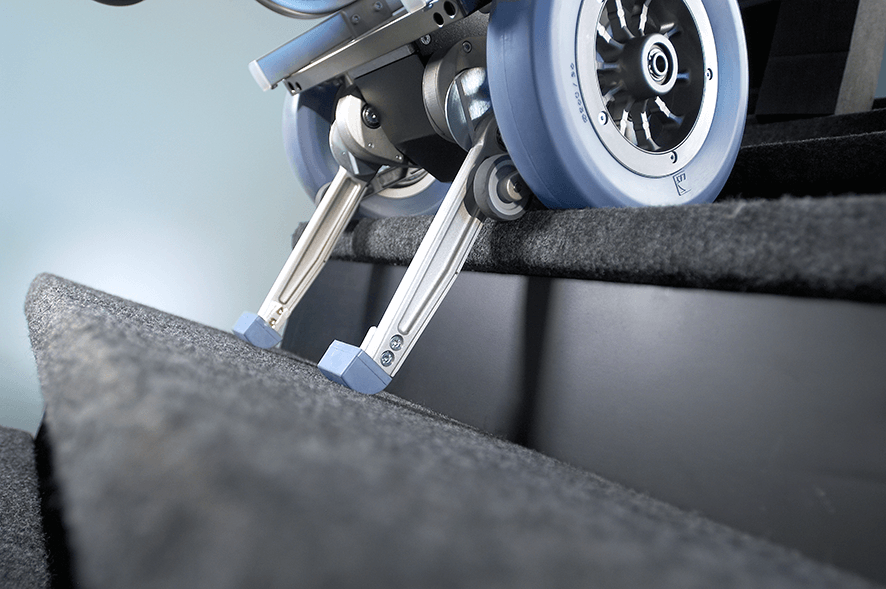
An electric stair climber with integrated seat is a technologically advanced medical device. A motor in the drive unit ensures effortless movement. The climbing legs or a climbing foot ensure a stable ascent or descent. Safety brakes prevent unintentional rolling down the edges of the steps and a single step control enables a safe ascent step by step. This function can be particularly useful for beginners.

In continuous climbing mode, the device can be operated without interruption. A control panel offers simple speed adjustment and has an up/down switch. The safety chip ensures safe parking even in public buildings or stairwells. If the safety chip is removed, no unauthorized persons can operate the stair climber.

A stair climber is designed in such a way that an optimum center of gravity ensures that the operator hardly feels the weight of the occupant. This means that hardly any force is required to move the user up and down stairs. ComfortStep technology ensures that the climbing legs or feet rest comfortably on each step.

Selection criteria when purchasing an electric stair climber with integrated seat

Summary: how to choose the right wheelchair

The following aspects are important when purchasing a wheelchair:

  • Type of wheelchair: Based on mobility impairment and place of use.
  • Seating comfort and ergonomics: Adjustability, upholstery and positioning.
  • Size and weight: Lightweight, foldable models for easy transportation.
  • Safety features: Brakes, reflective elements and standards.
  • Service and spare parts: Advice from specialist dealers and ensuring availability.

Several selection criteria are important when buying an electric stair climber with integrated seat. First of all, you should check the performance and technical data of the device. A good driving experience and a high level of safety are essential. The durability of the device should also be taken into account. Also make sure that the stair climber will not damage the edges of the stairs.

Also consider the flexibility of the stair climber. It should be suitable for many stair surfaces and ideally even for spiral staircases. A foldable, space-saving design is advantageous as it makes the stair climber easy to transport.

Important safety aspects when using the electric stair climber with integrated seat

Summary: how to choose the right wheelchair

The following aspects are important when purchasing a wheelchair:

  • Type of wheelchair: Based on mobility impairment and place of use.
  • Seating comfort and ergonomics: Adjustability, upholstery and positioning.
  • Size and weight: Lightweight, foldable models for easy transportation.
  • Safety features: Brakes, reflective elements and standards.
  • Service and spare parts: Advice from specialist dealers and ensuring availability.

Safety when using the electric stair climber with integrated seat is of the utmost importance. It is essential to read and understand the operating instructions carefully. When using the device, you should observe the load capacity to avoid overloading and potential accidents. It is recommended that only trained persons operate the device and have received thorough instruction. Practicing without an occupant is an important part of the routine to ensure that operation at low speed and single speed runs smoothly.

Care and maintenance of the electric stair climber with integrated seat

Summary: how to choose the right wheelchair

The following aspects are important when purchasing a wheelchair:

  • Type of wheelchair: Based on mobility impairment and place of use.
  • Seating comfort and ergonomics: Adjustability, upholstery and positioning.
  • Size and weight: Lightweight, foldable models for easy transportation.
  • Safety features: Brakes, reflective elements and standards.
  • Service and spare parts: Advice from specialist dealers and ensuring availability.

The electric stair climber with integrated seat requires careful care and regular maintenance to ensure that it functions optimally. This includes following the operating instructions and manufacturer's instructions. Use mild cleaning agents to clean the appliance to prevent damage. If anything is unclear, be sure to ask questions and report any problems in good time.

Regular maintenance of the stair climber is essential to ensure its longevity and safety. All functions should be checked and any necessary repairs carried out. Please note that improper maintenance can lead to serious problems. It is therefore advisable to have this carried out by qualified personnel.

Conclusion: Why an electric stair climber with integrated seat is a sensible investment

Summary: how to choose the right wheelchair

The following aspects are important when purchasing a wheelchair:

  • Type of wheelchair: Based on mobility impairment and place of use.
  • Seating comfort and ergonomics: Adjustability, upholstery and positioning.
  • Size and weight: Lightweight, foldable models for easy transportation.
  • Safety features: Brakes, reflective elements and standards.
  • Service and spare parts: Advice from specialist dealers and ensuring availability.

An electric stair climber with an integrated seat is a sensible investment because it increases mobility, range and flexibility. It allows you to move around your home safely and without barriers, which is particularly beneficial for people with reduced mobility.

In addition, this investment enhances your social life as you can easily participate in different events without having to worry about stairs. The range of an electric stair climber allows you to maintain your independence and keep your life active. Last but not least, the integrated seat offers additional comfort and safety. All these factors make an electric stair climber a worthwhile investment.

  • Stair climbers increase the mobility and independence of people with limited mobility
  • They enable access to buildings and rooms that would otherwise be inaccessible
  • They offer a safe and comfortable method of climbing stairs.

In patient transport, rescue services or institutions such as schools or public authorities, a stair climber can make a positive contribution to the health of staff by making it easier to lift and carry people. A stair climber is easy on the back and minimizes the risk of accidents. In addition, people with impaired mobility feel more comfortable in a stair climber than when they are carried conventionally.

  • They protect the health of staff
  • You reduce absences due to illness
  • You increase the well-being of patients

Where can a stair climber be purchased

Summary: how to choose the right wheelchair

The following aspects are important when purchasing a wheelchair:

  • Type of wheelchair: Based on mobility impairment and place of use.
  • Seating comfort and ergonomics: Adjustability, upholstery and positioning.
  • Size and weight: Lightweight, foldable models for easy transportation.
  • Safety features: Brakes, reflective elements and standards.
  • Service and spare parts: Advice from specialist dealers and ensuring availability.

As an institution or company:

Individual and personal advice is our top priority. Contact the manufacturer of the stair climber you require and arrange an appointment at your premises. Many companies will present the various stair climber models to you free of charge and without obligation and will answer all your questions about choosing a stair climber.

As an end customer (private individual):

The first step before applying for an aid, is a personal and individual consultation. Many manufacturers also offer an on-site service and will visit you at home. You should try out the various stairclimbers in your familiar surroundings and select the model that best meets your requirements and needs.

To apply for the stair climber you have chosen, you will then need to make an appointment with your doctor. Your doctor will check whether such an aid is necessary and, if necessary, issue you with a prescription. This prescription should always include the product name of the product that you have selected and tested extensively.

You can then use this prescription to contact a medical supply store near you. They will contact the manufacturer of the stair climber and also send a cost estimate to your health insurance company. Most stair climbers have an official aid number. The cost of the aid is therefore usually covered by your health insurance company and once it has been approved, the desired aid will be ordered and delivered to you as quickly as possible.

You can also find more information at:

Go to Guide

Frequently asked questions about stair climbers for wheelchairs (FAQs)

Is a stair climber covered by health insurance?

Whether a stair climber is covered by health insurance depends on various factors, including your medical need and your doctor's recommendations. In principle, stair climbers that have an official medical aid or care aid number are covered by health or care insurance. Please note that the final decision depends on the individual assessment.

How do I apply for a stair climber?

Please refer to the section "How can a mobile stair climber be purchased" above and to the aid guide provided for more detailed information.

On which stairs can a stair climber be used?

A stair climber can be used on different types of stairs, including straight stairs, spiral staircases and even outdoor stairs. You can use it on concrete stairs, wooden stairs, metal stairs, tiled stairs and many other surfaces. It is important to note that the stairs must be stable to ensure the safety of the user and occupants. It is therefore advisable to try out the desired stair climber model in your home before purchasing.

Does a stair climber damage the stairs?

A stair climber is designed so that it does not damage the stairs. Soft but durable materials such as rubber or plastic are used to ensure a firm grip on the steps without scratching or damaging them. It is important to use the stair climber correctly and maintain it regularly to ensure that it remains in good condition and does not damage the stairs as designed.

How do I adjust the stairclimber correctly for the operator?

To adjust the stair climber correctly for the operator, you should first consider the person's height. Adjust the handle so that it is at shoulder height to ensure an ergonomic posture. Make sure that the operator can comfortably reach all controls. Regularly check that all settings are still correct and adjust them if necessary. Safety and comfort should always be paramount.

  • s-max sella

    Stair climber with seat

  • c-max U1

    Stair climber with seat

  • CR23

    Stair climber for XXL solution

  • s-max sella vario

    Stair climber variation

  • c-max U2

    Stair climber with seat

  • The picture shows clean wheelchair wheels and castors.

    Wheelchair cleaning tips

    Maintenance & cleaning

    These tips will help you to optimally clean your manual wheelchair and, if necessary, your mobility aid.

  • The picture shows a detailed section of a V-MAX² push and brake aid. You can see the operating handle of the push aid with some functions, such as the ON/OFF switch, battery indicator and speed setting.

    What is a pushing and braking aid?

    Product description

    Why is a pushing and braking aid useful? What are its areas of application and how can it be purchased? You can find all answers here.

Read more …What is a stair climber with integreated seat?

  • Hits: 1513

What is a stair climber for wheelchairs?

Eine Treppensteighilfe für Rollstühle ist ein Gerät oder eine Vorrichtung, die Rollstuhlfahrern hilft, Treppen zu überwinden. Dieses Hilfsmittel sind besonders nützlich für Personen, die in Gebäuden leben oder arbeiten, in denen kein Aufzug vorhanden ist.

What is a stair climber for wheelchairs?

Summary: how to choose the right wheelchair

The following aspects are important when purchasing a wheelchair:

  • Type of wheelchair: Based on mobility impairment and place of use.
  • Seating comfort and ergonomics: Adjustability, upholstery and positioning.
  • Size and weight: Lightweight, foldable models for easy transportation.
  • Safety features: Brakes, reflective elements and standards.
  • Service and spare parts: Advice from specialist dealers and ensuring availability.

A stair climber for wheelchairs, also known as a mobile stair climber, is an aid that has been specially developed to transport people in wheelchairs up and down stairs. It contains a drive unit in which the motor is located and one or two climbing legs.

A bracket attached to the rear of the wheelchair allows the user's own wheelchair to be securely attached to the stair climber. It is operated by an attendant who controls the mobile stair climber. This technical solution improves the mobility and independence of people with reduced mobility and increases their quality of life.

Advantages and possible uses of a stair climber for wheelchairs

Summary: how to choose the right wheelchair

The following aspects are important when purchasing a wheelchair:

  • Type of wheelchair: Based on mobility impairment and place of use.
  • Seating comfort and ergonomics: Adjustability, upholstery and positioning.
  • Size and weight: Lightweight, foldable models for easy transportation.
  • Safety features: Brakes, reflective elements and standards.
  • Service and spare parts: Advice from specialist dealers and ensuring availability.

A stair climber for wheelchairs offers numerous advantages. It is mobile, flexible and adaptable, which means that it can be attached to your own wheelchair. A lightweight and dismountable design makes it easy to transport - it even fits in the trunk of a car. This makes an electric stair climber a practical alternative to stair lifts and stair crawlers.

Whether straight or spiral staircases, indoors or outdoors, at home or in public buildings such as doctors' surgeries, a stair climber is a useful companion. It enables outings with family and friends and significantly improves the mobility and independence of wheelchair users.

Functionality and technology of an electric stair climber for wheelchairs

Summary: how to choose the right wheelchair

The following aspects are important when purchasing a wheelchair:

  • Type of wheelchair: Based on mobility impairment and place of use.
  • Seating comfort and ergonomics: Adjustability, upholstery and positioning.
  • Size and weight: Lightweight, foldable models for easy transportation.
  • Safety features: Brakes, reflective elements and standards.
  • Service and spare parts: Advice from specialist dealers and ensuring availability.

An electric stair climber for wheelchairs works with a special motor in the drive unit that controls the climbing process. The climbing legs or the climbing foot of a stair climber are designed so that they touch down safely on every step. Safety brakes also contribute to safety by preventing slipping on each step.

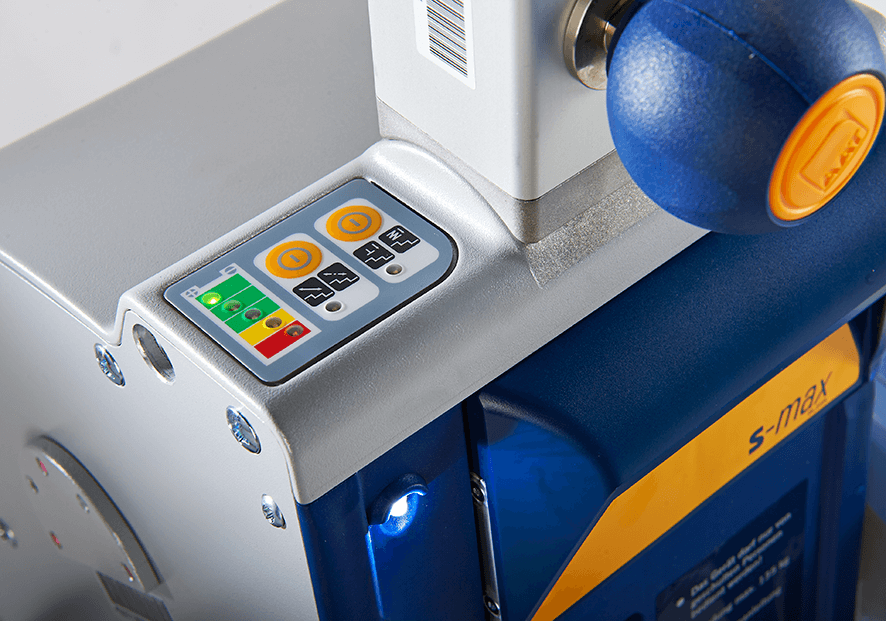
A control panel on the handle of the stair climber enables single step control and continuous climbing mode, with infinitely variable speed adjustment. An on/off switch and a safety chip provide protection against unauthorized use. A powerful rechargeable battery is inserted into the drive unit for operation.

Tips for choosing the right stair climbing aid for your wheelchair

Summary: how to choose the right wheelchair

The following aspects are important when purchasing a wheelchair:

  • Type of wheelchair: Based on mobility impairment and place of use.
  • Seating comfort and ergonomics: Adjustability, upholstery and positioning.
  • Size and weight: Lightweight, foldable models for easy transportation.
  • Safety features: Brakes, reflective elements and standards.
  • Service and spare parts: Advice from specialist dealers and ensuring availability.

Choosing the right stair climbing aid for your wheelchair can be a challenge. It is important to seek careful advice and try out different models. Detailed instruction on how to use the devices is also essential for your safety and your confidence in using the aid.

Consider the technical data of the devices, especially the weight and power. A lightweight device is easier to transport, while a powerful device offers greater safety. Additional benefits such as a single step control can be a great help, especially for beginners.

Make sure that the stair climber can be attached to your wheelchair and is suitable for your needs. A medical supply store or the manufacturer of the stair climber can help you with the selection and ensure that the stair climber meets your requirements. As a rule, most manual wheelchairs can easily be fitted with a mobile stair climber.

Important safety aspects when using the stair climber

Summary: how to choose the right wheelchair

The following aspects are important when purchasing a wheelchair:

  • Type of wheelchair: Based on mobility impairment and place of use.
  • Seating comfort and ergonomics: Adjustability, upholstery and positioning.
  • Size and weight: Lightweight, foldable models for easy transportation.
  • Safety features: Brakes, reflective elements and standards.
  • Service and spare parts: Advice from specialist dealers and ensuring availability.

When using the stair climber, you should read the operating instructions carefully and familiarize yourself with the manufacturer's instructions. It is important that only trained persons operate the device and that you feel safe before using it to its full extent. Practice first without an occupant and at low speed to familiarize yourself with the single speed control and the general routine.
Handle the stair climber with care to avoid possible damage or accidents. Any problems should be reported immediately to the medical supply store or the manufacturer. Do not hesitate to contact your medical supply store or the manufacturer's contact person if you have any questions about handling or need a refresher course.

Care and maintenance of the electric stair climber for wheelchairs

Summary: how to choose the right wheelchair

The following aspects are important when purchasing a wheelchair:

  • Type of wheelchair: Based on mobility impairment and place of use.
  • Seating comfort and ergonomics: Adjustability, upholstery and positioning.
  • Size and weight: Lightweight, foldable models for easy transportation.
  • Safety features: Brakes, reflective elements and standards.
  • Service and spare parts: Advice from specialist dealers and ensuring availability.

Regular care and maintenance of your electric stair climber for wheelchairs is essential to ensure the longevity and performance of the medical device. We recommend that you read the manufacturer's operating instructions carefully. Here you will find detailed instructions on proper care and maintenance. Always use mild detergents to clean the device and protect it from moisture. It is advisable to check the wearing parts regularly and have them replaced by your medical supply store if necessary.

Charge the battery regularly to ensure optimum performance. If necessary, you can contact a medical supply store near you.

Conclusion: Why a stair climber for wheelchairs is a sensible investment

Summary: how to choose the right wheelchair

The following aspects are important when purchasing a wheelchair:

  • Type of wheelchair: Based on mobility impairment and place of use.
  • Seating comfort and ergonomics: Adjustability, upholstery and positioning.
  • Size and weight: Lightweight, foldable models for easy transportation.
  • Safety features: Brakes, reflective elements and standards.
  • Service and spare parts: Advice from specialist dealers and ensuring availability.

A stair climber for wheelchairs increases mobility and flexibility by overcoming barriers such as stairs. These devices are an excellent alternative if no elevator is available. They are easy to take anywhere as they can usually be dismantled and easily transported in a car trunk.
As soon as you need a new wheelchair, the stair climber can usually be adapted for re-use. This investment can therefore make a significant contribution to improving quality of life, as it not only makes transportation easier, but also offers the opportunity to live independently and self-determined.

  • Stair climbers increase the mobility and independence of wheelchair users
  • They provide access to buildings and rooms that would otherwise be inaccessible
  • They offer a safe and comfortable method of negotiating stairs.
  • They can be retrofitted to most wheelchair models

Where can a stair climber be purchased?

Summary: how to choose the right wheelchair

The following aspects are important when purchasing a wheelchair:

  • Type of wheelchair: Based on mobility impairment and place of use.
  • Seating comfort and ergonomics: Adjustability, upholstery and positioning.
  • Size and weight: Lightweight, foldable models for easy transportation.
  • Safety features: Brakes, reflective elements and standards.
  • Service and spare parts: Advice from specialist dealers and ensuring availability.

As an institution or company:

Individual and personal advice is our top priority. Contact the manufacturer of the stair climber you want and arrange an appointment at your premises. Many companies will present the various stair climber models to you free of charge and without obligation and answer any questions you may have about choosing a stair climber.

As an end customer (private individual):

The first step before applying for an aid, is a personal and individual consultation. Many manufacturers also offer an on-site service and will visit you at home. You should try out the various stairclimbers in your familiar surroundings and select the model that best meets your requirements and needs.

To apply for the stair climber you have chosen, you will then need to make an appointment with your doctor. Your doctor will check whether such an aid is necessary and, if necessary, issue you with a prescription. This prescription should always include the product name of the product that you have selected and already tested extensively.

You can then use this prescription to contact a medical supply store near you. They will contact the manufacturer of the stair climber and also send a cost estimate to your health insurance company. Most stair climbers have an official aid number. The cost of the aid is therefore usually covered by your health insurance company and, once approved, the desired aid will be ordered and delivered to you as quickly as possible.

You can also find more information at:

go to guide

Frequently asked questions about stair climbers for wheelchairs (FAQs)

Is a stair climber covered by health insurance?

Whether a stair climber is covered by health insurance depends on various factors, including your medical need and your doctor's recommendations. In principle, stair climbers that have an official medical aid or care aid number are paid for by the health or care insurance fund. Please note that the final decision depends on the individual assessment.

How do I apply for a stair climber?

Please refer to the chapter "How can a mobile stair climber be purchased" above and to the aid guide provided for more detailed information.

On which stairs can a stair climber be used?

A stair climber can be used on various types of stairs, including straight stairs, spiral staircases and even outdoor stairs. You can use it on concrete stairs, wooden stairs, metal stairs, tiled stairs and many other surfaces. It is important to note that the stairs must be stable to ensure the safety of the user and occupants. It is therefore advisable to try out the stairclimber model you want at home before buying.

Does a stair climber damage the stairs?

A stair climber is designed so that it does not damage the stairs. Soft but durable materials such as rubber or plastic are used to ensure a firm grip on the steps without scratching or damaging them. It is important to use the stairclimber correctly and maintain it regularly to ensure that it remains in good condition and does not damage the stairs as designed.

How do I adjust the stair climber correctly to the operator?

To adjust the stair climber correctly to the operator, you should first take the height of the person into account. Adjust the handle so that it is at shoulder height to ensure an ergonomic posture. Make sure that the operator can comfortably reach all controls. Check regularly that all settings are still correct and adjust them if necessary. Safety and comfort should always be paramount.

s-max

stair climber for wheelchairs

  • The picture shows clean wheelchair wheels and castors.

    Wheelchair cleaning tips

    Maintenance & cleaning

    These tips will help you to optimally clean your manual wheelchair and, if necessary, your mobility aid.

  • The picture shows a detailed section of a V-MAX² push and brake aid. You can see the operating handle of the push aid with some functions, such as the ON/OFF switch, battery indicator and speed setting.

    What is a pushing and braking aid?

    Product description

    Why is a pushing and braking aid useful? What are its areas of application and how can it be purchased? You can find all answers here.

Read more …What is a stair climber for wheelchairs?

  • Hits: 3606